Resources
This notebook demonstrates basic functionality offered by the Coin Metrics Python API Client and Network Data Pro. Coin Metrics offers a vast assortment of data for hundreds of cryptoassets. The Python API Client allows for easy access to this data using Python without needing to create your own wrappers usingrequests and other such libraries.
To understand the data that Coin Metrics offers, feel free to peruse the resources below.
- The Coin Metrics API v4 website contains the full set of endpoints and data offered by Coin Metrics.
- The Coin Metrics Product Documentation gives detailed, conceptual explanations of the data that Coin Metrics offers.
- The API Spec contains a full list of functions.
File Download
Download the entire notebook as either a jupyter notebook to run yourself or as a pdf from the two links below NDP - Hourly Metrics.ipynb NDP - Hourly Metrics (1).pdfNotebook Setup
Hourly Metrics
Coin Metrics is pleased to announce the release of a new set of hourly metrics for Network Data Pro. This feature unlocks a new level granularity for our existing suite of on-chain metrics. Previously, our Network Data Pro offering provided both Daily (EOD) and Block-by-Block (BBB) aggregations of on-chain metrics. Now, users have the ability to capture on-chain activity at an intermediate frequency, providing timely insights into metrics like Active Address Count, Transaction Fees, and more.Retrieve Hourly Metrics Catalog
Example Analyses
ETH Fee Burn vs. Tx Count
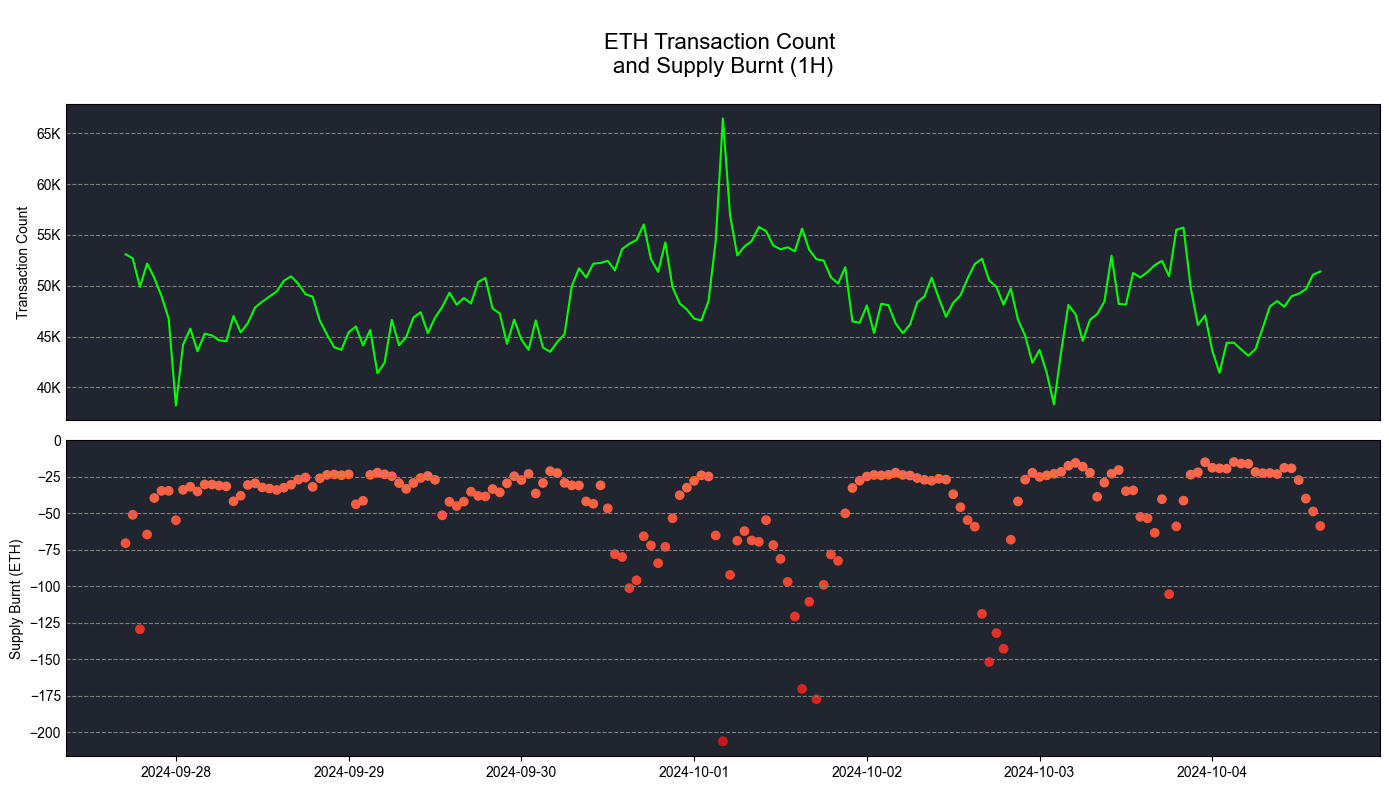
First, we’ll examine the relationship between Ethereum’s transaction count (TxCnt) and the amount of ETH being “burned,” or removed from circulation (SplyBurntNtv). Since the introduction of EIP-1559, Ethereum has segmented gas fees into two separate fees: the “base fee” and the “priority tip.” While the priority tip is rewarded to validators, the base fee is burnt. Over the long-term, this has enabled ETH to offer a deflationary monetary policy, with periods of high transaction activity permanently destroying units of ETH and lowering the total circulating supply. For more details on the impact of EIP-1559, check out State of the Network #166: Ethereum After EIP-1559
167 rows × 2 columns
BTC Block Interval vs. Mean Fee
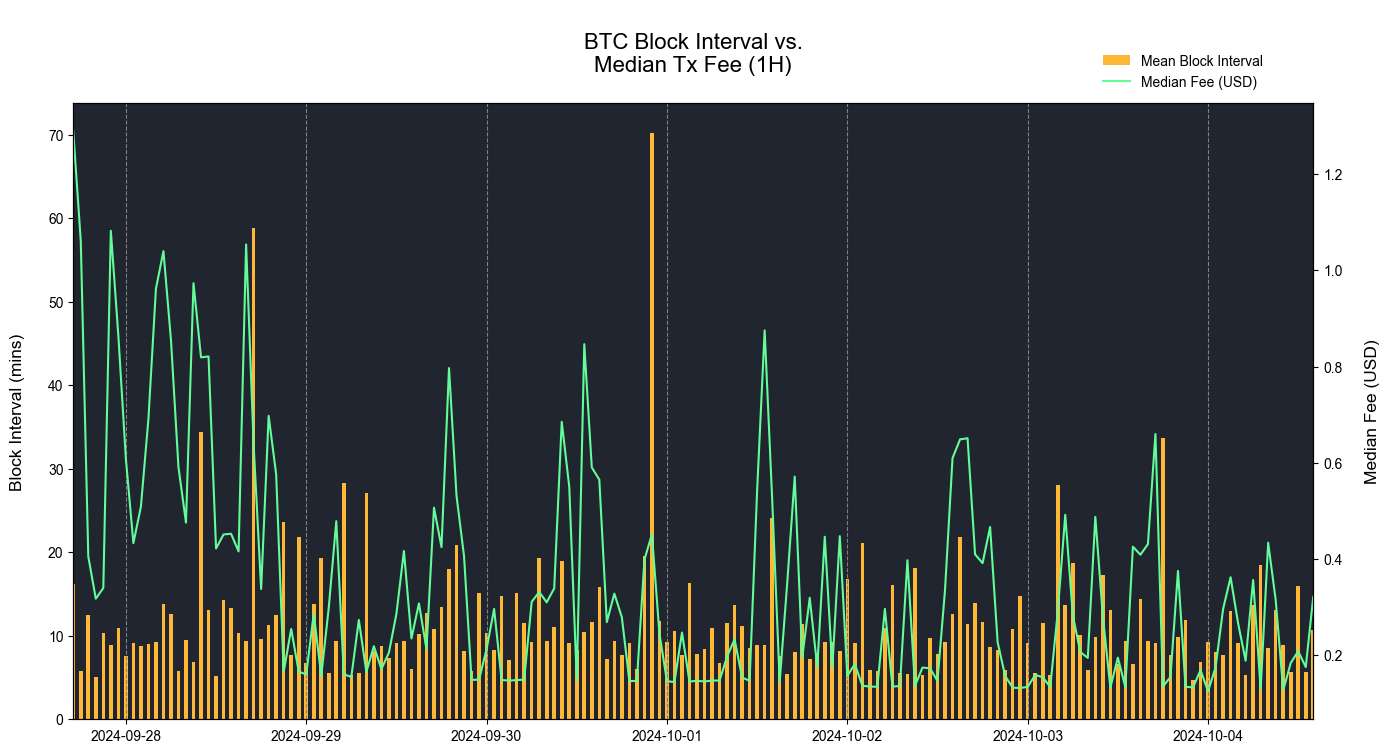
In contrast to Etheruem’s predictable 12-second block time, Bitcoin’s block interval is based on probabilistic factors— there’s no way of knowing for sure when the next block will come in. The blockchain’s difficulty adjustment software targets an average block interval of 10 minutes, but blocks can occasionally take an hour or more to be mined, resulting in brief periods of transaction congestion. This congestion can result in spikes in transaction fees, as a busy backlog of BTC users bid up fees in order to ensure their inclusion in the next block. In the following analysis, we examine how Bitcoin’s median transaction fee (FeeMedUSD) responds to prolonged block intervals (BlkIntMean).
166 rows × 3 columns